
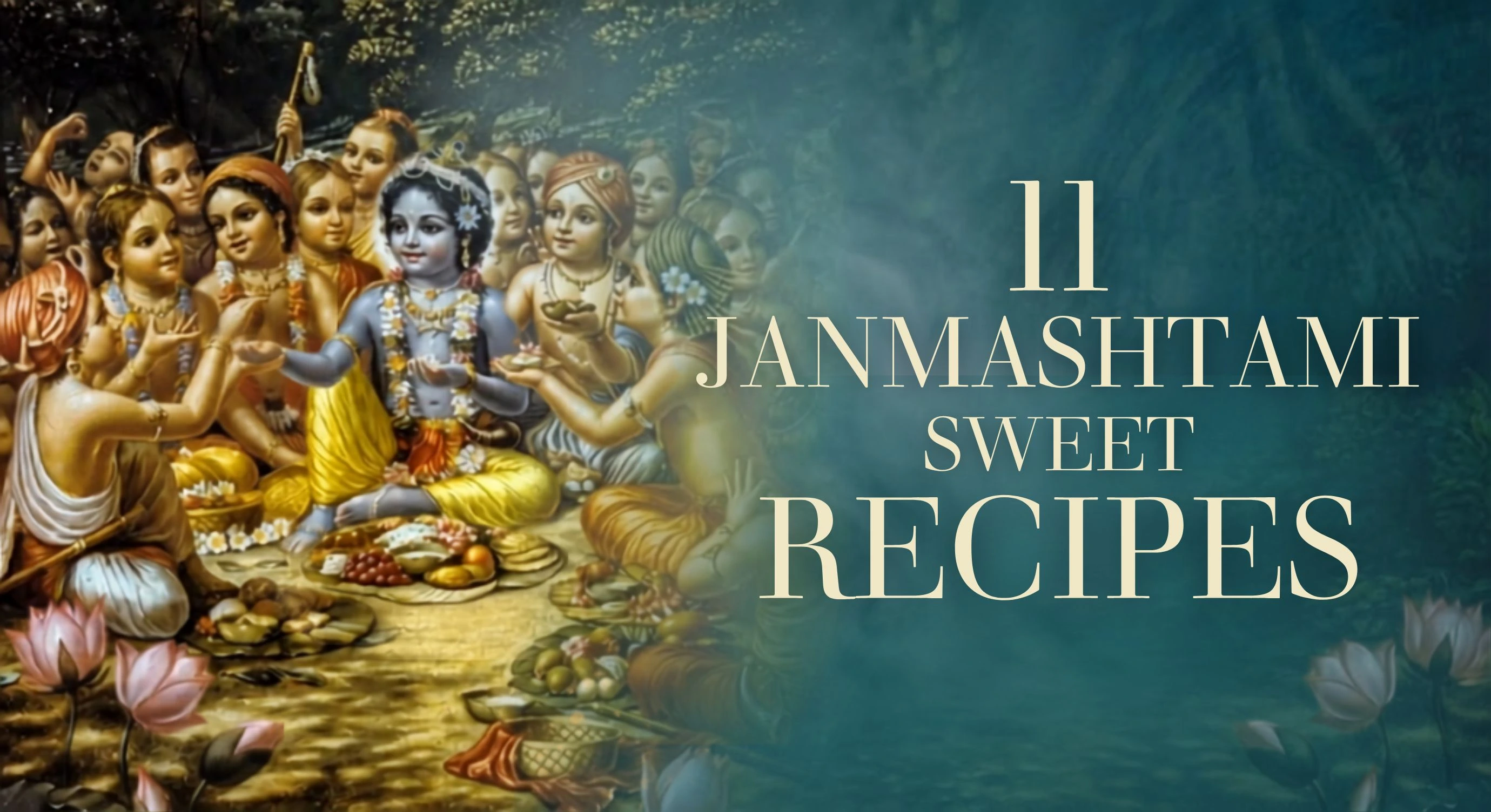
Celebrating Lord Krishna’s appearance should be filled with the sweetness and joy he spread over us during his pastimes. So, in the spirit of that appearance, we should make some of the best Krishna Janmashtami sweets, which were the Lord's favorites on the special occasion, right?.
In this article, we’ll look at some of the best Janmashtami sweet recipes that are easy to prepare and delicious. It includes traditional bhog preparations, milk-based desserts and festive mithai that can be prepared at home.
11 Best Janmashtami Sweet Recipes to Make at Home
Below are the 11 best Janmashtami sweet-making recipes for making great sweets and enjoying the festival's rich flavors.
1. Makhan Mishri:
We’ve all heard stories of Lord Krishna stealing butter, or Makhan, in his childhood pastimes in Vrindavan. So, why not make one of those sweets on his special day, which he loved so much?. To make tasty makhan mishri, the first step is to use the best-quality ingredients.
Recipe and ingredients:
- Cream (2 cups): Gather fresh malai from the cow’s milk, stored for a few days.
- Blend: Put the cream into a blender with 4-5 ice cubes.
- Churn: Blend it until the fresh white butter separates from the liquid buttermilk.
- Collect: Take out the fresh butter and wash it once in cold water.
- Mix: Now add crushed rock sugar (Mishri), 3 to 4 spoons, and place 2-3 Tulsi leaves on top; a belief traditionally associated with Lord Krishna.
Tip: If fresh malai is not available, you can use 200 g unsalted butter.
2. Panjiri:
Panjiri originated as an Ayurvedic health tonic and is one of the best and easiest Janmashtami sweets to make. It is vrat-friendly, so everyone who has observed the vrat can enjoy this delicious, healthy sweet in 20 minutes.
Recipe and ingredients:
- Roast: In a pan, roast 1 cup coriander powder with ½ cup ghee over a low flame until golden brown and fragrant (approx. 10-12 mins).
- Cool: Remove the roasted flour onto a plate and let it cool slightly.
- Dry Fruits: Roast 2 tbsp of dry coconut (copra), 2 tbsp of chopped almonds and cashews, and 1 tbsp of melon seeds (magaz) separately.
- Mix: Once the flour has cooled, mix the roasted dry fruits, add ½ cup crushed sugar and ½ tbsp cardamom powder (ealichi), and combine them well.
- Store: Keep in an airtight container; it stays fresh for 2-3 weeks.
Tip: For a healthier version, replace sugar with jaggery powder, which boosts flavor and adds nutritional value.
3. Kheer (Rice Kheer):
A much-loved, easy-to-make Janmashtami sweet, Kheer is one of the top sweet dishes in India. Although it has a simple recipe, it requires close attention to extract the best flavor.
Recipe and Ingredients:
- Wash: Soak ½ cup basmati rice in water for 15-20 minutes, then drain the water completely.
- Boil: Heat 1 liter of milk in a heavy pan over gentle heat.
- Add rice: After a few minutes, add the rice to the boiling milk, keep the flame low, and stir well.
- Simmer: Cook for 20-25 minutes, stirring until the milk is absorbed and the rice is soft and mashable.
- Dry Fruits: Add 2 tbsp of dry fruits chopped almonds, cashews, and pistachios- along with a few strands of saffron (Kesar).
- Sweeten: Turn off the flame, add ½ cup sugar (or jaggery powder), and mix well.
Tip: Stir the kheer frequently so that it does not burn or stick to the bottom of the pan.
4. Peda:
Mathura peda is a very famous sweet offered on Janmashtami in Braj. In addition, it has a caramelized magic that makes it taste like it's melting on your tongue with each bite.
Recipe and Ingredients:
- Sauté: Heat 2 tbsp ghee in a heavy pan, add the crumbled mawa, and cook over low heat until melted.
- Caramelize: Keep stirring until the mawa turns a deep, rich dark brown and smells nutty.
- Moisten: Add ½ cup of milk, mix well over medium flame, and cook until the mixture forms a dry mass.
- Cool: Turn off the flame and let the mawa mixture cool down so it is safe to handle.
- Flavor: Add 1/2 cup of powdered sugar and ¼ tbsp of cardamom (elaichi) powder to the warm mixture and mash it well.
- Shape: Pinch small portions of the mix, roll them into balls, and flatten them gently to get traditional peda shapes.
- Coat: Before serving, add extra powdered sugar for a Mathura look.
Tip: Cook mawa slowly over a steady, low flame, stirring continuously so it doesn’t burn and cooks evenly. 300g
5. Shrikhand:
Shrikhand is a very famous and traditional sweet in regions like Maharashtra and Gujarat. Among all other Janmashtami special recipes, this one stands out because it is mainly prepared on festivals like Gudi Padwa, Ganesh Chaturthi, and Janmashtami. It is one of the best easy-to-make curd desserts.
Recipe and Ingredients:
- Strain: Place a clean, thin cloth over a bowl and pour yogurt into it.
- Drain: Tie the cloth tightly and place it in the fridge for 4 to 6 hours to let any separated water drain out.
- Infuse: Soak the saffron strands in 1 tbsp of warm milk and let them settle for a few minutes.
- Whisk: Transfer the thick hung curd to a bowl and stir it gently until it gets smooth and creamy.
- Sweeten: Add the powdered sugar, cardamom powder, and saffron milk to the yogurt.
- Mix: Fold everything together gently until the sugar dissolves completely.
- Chill: Keep it in the fridge for a few hours to get it creamier and thicker.
- Serve: Garnish with chopped dry fruits before serving.
Tip: Use fresh curd and avoid whisking unnecessarily to thicken it, as it might get runny.
6. Malpua:
Malpua is a great Janmashtami sweet, deep-fried and rich in taste. Eaten with various syrups, rabri, and sugar. This dish is so traditional that it has been mentioned as apupa in the Rig Veda. It is also considered in the Chappan Bhog prasad offered to Lord Jagannath.
Recipe and Ingredients:
- Blend: Combine all flours, such as maida and suji, along with a splash of milk khoya in a bowl.
- Infuse: Soak a few saffron strands in 1 tbsp of warm milk for a few minutes.
- Whisk: Stir the batter until smooth, lump-free, and thick enough to pour.
- Flavor: Stir the saffron milk, cardamom powder, and a pinch of fennel seeds (saunf) into the batter.
- Rest: Cover the bowl and let the batter rest at room temperature for 30 to 40 minutes.
- Syrup: Boil sugar and water together with cardamom and saffron until it forms a sticky, thread-like syrup.
- Fry: Drop small ladlefuls of batter into hot ghee or oil over medium heat and fry until the edges turn golden and crispy.
- Soak: Take the fried malpuas and drop them into the sugar syrup for 2 minutes,
- Serve: Take them out of the syrup and garnish with pistachios and almonds before eating.
Tip: Keep the oil on medium heat so the malpuas cook evenly and get crispy without burning.
7. Rabri:
Rabri is a creamy, milk-based dessert that pairs beautifully with festive meals and can also be prepared as part of a Janmashtami bhog. Lord Krishna always loved these types of sweets, so why don't we make it?
Recipe and Ingredients:
- Boil: Put 1 liter of milk in a wide, heavy-bottomed pan and bring it to a boil.
- Simmer: Lower the flame once the milk boils.
- Collect: As a layer of cream forms on the top of the milk, gently take it out of the pan.
- Repeat: Do this process again, collect new cream layers, and take them out in the same pan.
- Infuse: Soak a few saffron strands in 1 tbsp of warm milk.
- Sweeten: Pour 3 to 4 tbsp of sugar and saffron milk into the middle liquid milk. Stir it gently to dissolve.
- Combine: Scrape all the collected cream layers into the thickened leftover milk.
- Finish: Add a little cardamom powder, mix well, and garnish with chopped nuts like almonds and pistachios before serving.
8. Mohanthal:
Mohanthal is a very famous sweet in regions like Gujarat and Rajasthan, commonly prepared on Krishna Janmashtami. Its name resonates strongly with Lord Krishna, as Mohan is one of His names, and thal means a dish offered to Him.
Recipes and Ingredients:
- Roast: Heat 4 tbsp ghee in a heavy pan, add 1 cup coarse besan, and roast over low heat, whisking continuously.
- Cook: Roast for 15-18 minutes, until the besan turns golden brown and releases a rich, nutty aroma.
- Moisten: Sprinkle 2 tbsp warm milk over the roasted besan while stirring, so it forms small, crumbly granules.
- Cook: Turn off the flame and let the mixture cool down slightly for a few minutes.
- Prepare syrup: In another pan, heat ½ cup of sugar with ¼ cup water until it reaches a thick, stringy consistency.
- Combine: Pour the warm sugar syrup into the besan mixture and mix it gently, taking care not to overwork it.
- Flavor: Add ¼ tbsp cardamom powder and a pinch of saffron strands, and mix well.
- Set: Transfer the mixture into a greased tray, spread it evenly, and press it down lightly.
- Garnish: Top with chopped almonds and pistachios, then let it set for 1-2 hours before cutting into squares.
Tip: Roast the besan on a low flame only - high heat can burn it quickly and give the mohanthal a bitter taste.
9. Sooji Halwa (Prasad):
Sooji Halwa is the most classic prasad offered in temples across India, making it one of the simplest Janmashtami sweets you can prepare in just 15 minutes. With only a handful of pantry ingredients, this warm, ghee-roasted halwa is perfect for last-minute bhog preparation.
Recipe and Ingredients:
- Roast: Heat 3 tbsp ghee in a pan, then add 1 cup sooji (semolina) and roast over a low flame while stirring continuously.
- Cook: Roast for 8-10 minutes until the sooji turns light golden and gives off a nutty aroma.
- Boil: In a separate pan, bring 2 cups of water to a boil with ½ cup of sugar until the sugar dissolves completely.
- Combine: Slowly pour the hot sugar water into the roasted sooji, stirring quickly to avoid lumps.
- Simmer: Cook over low heat for 3-4 minutes, until the mixture thickens and starts to leave the sides of the pan.
- Flavor: Add ¼ tbsp of cardamom powder, along with a few chopped cashews and raisins, then mix well.
- Tip: Always add hot water (not cold) to the roasted sooji, as it helps the halwa cook faster and prevents lumps.
10. Mewa Paag:
Mewa Paag is a rich, dry-fruit-based sweet made primarily for Janmashtami and is especially popular in North Indian households. Packed with nutritious nuts and mildly sweetened, it's an energizing treat that also makes for a wholesome bhog offering.
Recipe and Ingredients:
- Roast: Heat 2 tbsp ghee in a pan and add 1 cup mixed chopped dry fruits (almonds, cashews, pistachios), roasting on low flame for 4-5 minutes.
- Grind: Once slightly cooled, coarsely grind the roasted dry fruits along with 2 tbsp of melon seeds (magaz) and 2 tbsp of desiccated coconut.
- Prepare syrup: In a pan, heat ½ cup sugar with 2-3 tbsp water over medium heat until it reaches a one-string consistency.
- Combine: Add the ground dry fruit mixture to the sugar syrup and mix quickly and thoroughly.
- Flavor: Add ¼ tbsp of cardamom powder and a few saffron strands, then mix well.
- Set: Immediately transfer the mixture onto a greased plate or tray, spreading it evenly with a spatula.
- Shape: While slightly warm, cut it into square or diamond-shaped pieces.
Tip: Work quickly once the syrup is added, as the mixture hardens fast and becomes difficult to shape once it cools completely.
11. Kalakand:
Kalakand is a rich, milk-based fudge with a soft, grainy texture that gives this list of Janmashtami mithai recipes a strong, indulgent finish. Made using paneer and condensed milk, it's a festive favorite that looks as good as it tastes.
Recipe and Ingredients:
- Crumble: Take 1 cup of fresh paneer and crumble it finely by hand or with a fork.
- Heat: In a pan, add the crumbled paneer along with ¾ cup condensed milk and mix well.
- Cook: Stir continuously over a medium-low flame for 10-12 minutes, until the mixture thickens slightly.
- Add milk solids: Mix in ¼ cup milk powder (khoya substitute) to give the kalakand its classic grainy texture.
- Flavor: Add ¼ tbsp of cardamom powder and a few saffron strands, then mix well.
- Set: Transfer the mixture to a greased tray, spread it evenly, and level the top with a spatula.
- Garnish: Top with chopped pistachios and let it set in the fridge for 2 hours before cutting into squares.
Tip: Keep stirring continuously while cooking, as the mixture can stick and burn easily due to the condensed milk.
What Makes Janmashtami Sweets Special?
Janmashtami sweets are more than just festive treats; they reflect the foods traditionally associated with Lord Krishna’s childhood pastimes. Makhan, milk, and dahi hold a special place in Krishna traditions, which is why many Janmashtami offerings feature dairy-based preparations.
Many devotees also prepare a variety of bhog for Lord Krishna during Janmashtami. The tradition of offering an elaborate spread of food is closely associated with Krishna worship and the rich food traditions of Braj.
So, whether you are following a simple Janmashtami sweet recipe or making desserts like Mohanthal, the most important thing is the devotion behind it. It should be made sweetly and first should be offered as bhoga to Lord, then serve it among your loved ones.
Conclusion
Janmashtami marks the day Lord Krishna descended to protect and nurture the world with his miraculous deeds and boundless love. In gratitude and celebration of his blessings, we honor this day by making it special and memorable for our families. So, follow these traditional Janmashtami mithai recipes to prepare a grand offering for the Lord, and make this festival truly joyous by embracing the spirit of devotion, togetherness, and sweetness.
FAQs
Which sweet is Lord Krishna’s favorite?
Makhan Mishri is widely believed to be Lord Krishna’s favorite sweet, as it signifies his childhood love for butter and dairy.
What is offered as bhog on Janmashtami?
Traditional Janmashtami offerings include Makhan Mishri, Panjiri, Kheer, Peda, and Panchamrit. These offerings are sattvic, first offered as bhog to the Lord and then distributed as prasad.
Which sweets can be made in advance for Janmashtami?
Sweets like Peda, Kalakand, Mohanthal, and Mews Paag can be prepared 1- 2 days before the festival. However, curd desserts like Shrikhand and Rabri should be made fresh or a few hours before serving for best taste and texture.
What is the difference between Bhog and Prasad?
Bhog refers to the food offered to Lord Krishna, while prasad is the same food, which, once offered to the Lord, is distributed among devotees as a blessing.
How many dishes are included in Chappan Bhog?
Chappan Bhog consists of 56 different food items, including sweets and milk-based dishes, offered to Lord Krishna at midnight, the time believed to be His birth.
Can Janmashtami sweets be made without sugar?
Yes, many Janmashtami sweets like Panjiri and Mewa Paag can be made healthier by replacing sugar with jaggery powder, which also adds extra nutritional value along with a richer flavor.
Offer Seva This Janmashtami
Your offering supports the sacred Janmashtami celebrations and devotional service to Shri Krishna.
Share this article
Help spread the joy and devotion of Janmashtami with others.